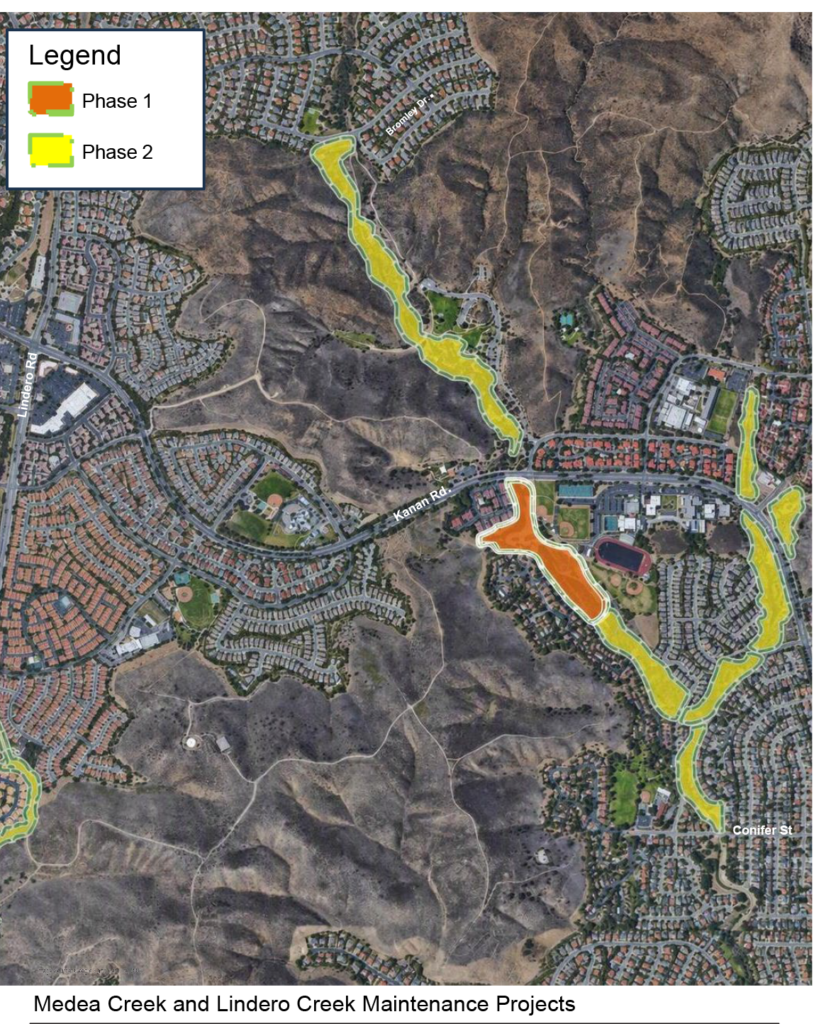
Medea and Lindero Creek Maintenance Projects

Invasive Vegetation and Hazardous Fuel Reduction Project
WHY INVASIVE VEGETATION, DEADWOOD & DEBRIS ARE BEING REMOVED?
Medea Creek and Lindero Creek are an important natural resource and part of the Oak Park community. The Rancho Simi Recreation and Park District is undertaking targeted maintenance within portions of the creek to reduce hazardous vegetation and accumulated fuels while protecting native riparian habitat and wildlife.
The work is being conducted in accordance with a California Department of Fish and Wildlife (CDFW) Lake and Streambed Alteration Agreement for both creeks. The Agreement establishes specific requirements for how the work must be performed and how biological resources must be protected.
WHY IS THIS WORK NEEDED?
Reduce Wildfire Fuel Loads
Deadwood, accumulated debris, and invasive vegetation can contribute to the amount of combustible material within the corridors of the creeks. The primary purpose of the project is to reduce fuel loads and create defensible space for the surrounding community.
Remove Invasive Plant Species
Invasive, non-native plants can spread throughout riparian areas and compete with native vegetation. The project specifically targets invasive vegetation while retaining and protecting native habitat. CDFW determined that the project will enhance native riparian habitat.
Removing targeted invasive vegetation and accumulated material can help maintain the creek’s native riparian environment. At the same time, because Medea Creek and Lindero Creek provide habitat for birds, mammals, reptiles, amphibians, and other wildlife, vegetation removal must be performed carefully and under biological oversight.
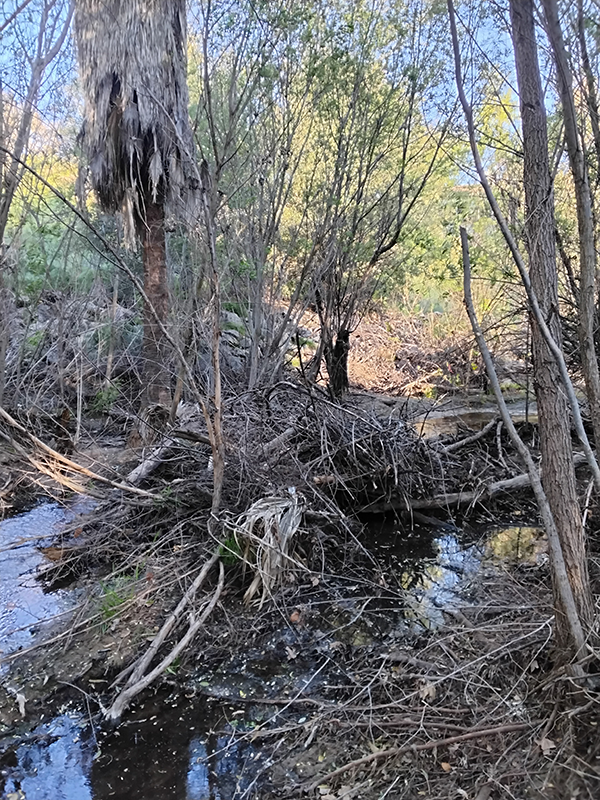
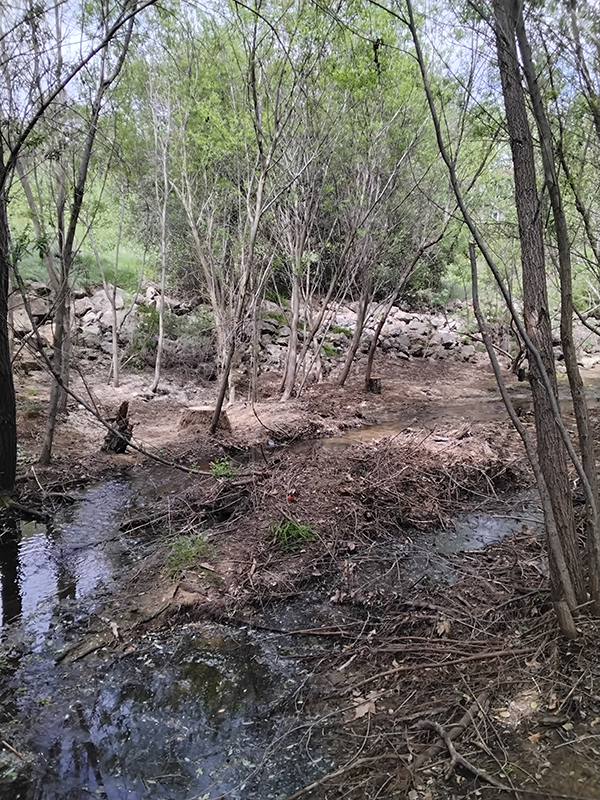
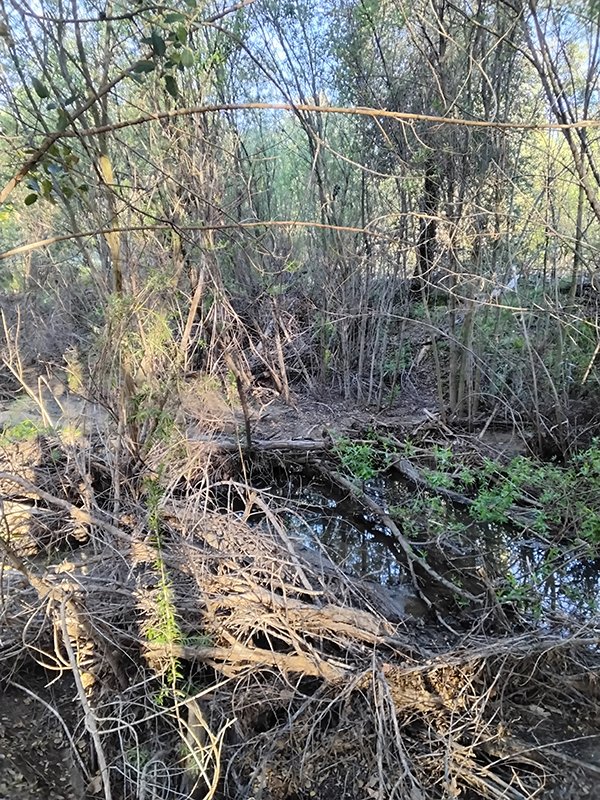
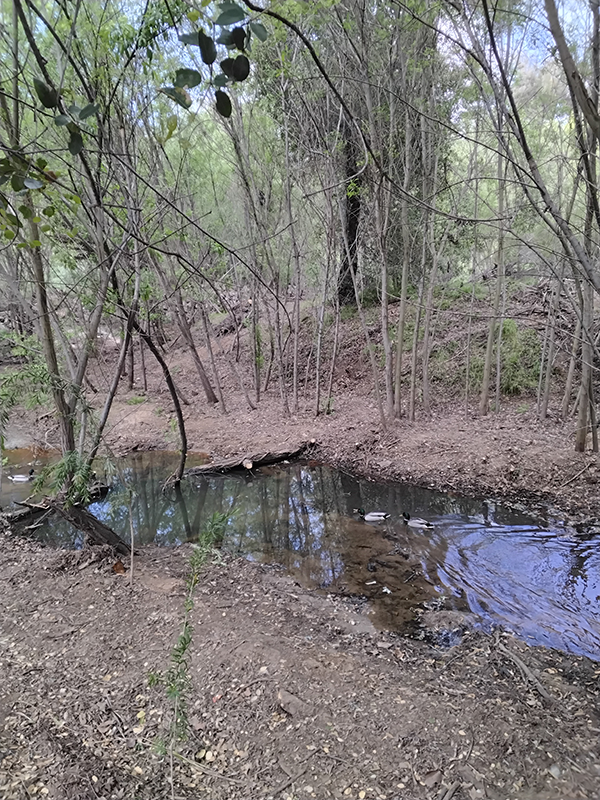
Deadwood, accumulated debris, and invasive vegetation can be seen in the images below:
HOW WILL THE WORK BE DONE?
The project is designed to use targeted, low-impact methods rather than widespread clearing with heavy machinery.
1. Work Areas Are Carefully Identified
The limits of vegetation removal were identified in advance. A qualified Biologist, contracted by the Park District will monitor project activities involving the clearing of sensitive stream habitat and has the authority to stop work when necessary to protect biological resources or ensure compliance with the CDFW Agreement.
2. Work Activities
Crews perform vegetation removal on foot using hand tools and equipment such as handsaws, weed whips, chainsaws, hoes, and other appropriate tools.
Depending on the vegetation, removal methods may include:
- Hand-pulling invasive plants
- Cutting invasive vegetation
- Carefully cutting non-native trees into sections
- Lowering tree sections using ropes when necessary
- Applying CDFW approved herbicide directly to designated invasive plants or cut stumps
- Leaving stumps in place where specified to minimize soil disturbance
3. Invasive Vegetation Is Properly Disposed Of
Invasive vegetation capable of spreading or resprouting is removed from the site and properly disposed of rather than redistributed within the creeks. CDFW also requires measures to prevent invasive plants, animals, or microorganisms from being transported into or between project areas.
4. Deadwood and Debris Management
Deadwood and appropriate debris may be chipped or mulched and distributed outside the stream banks, while invasive plant material capable of resprouting or spreading by seed must be removed from the site.
PROTECTING WILDLIFE COMES FIRST
Medea Creek and Lindero Creek supports a variety of wildlife. For that reason, CDFW requires extensive biological protection measures before and during vegetation removal.
Before Work Begins
The Park District’s contracting biologist must conduct two biological surveys within one week before work begins. Surveys look for wildlife and botanical resources, active bird nests, burrows, woodrat nests, and aquatic species where water is present.
The survey results must be provided to CDFW before work begins. If special-status species are found, work cannot begin until the appropriate protective measures are addressed.
Special Protection for Nesting Birds
When nesting birds may be present, additional surveys are required shortly before work begins. Biologists inspect suitable nesting habitat, including trees, shrubs, cavities, burrows, structures, and even bare ground.
If an active nest is found, work does not simply continue around it.
The biologist establishes a protective buffer around the nest and monitors the birds. No work may occur within that buffer until the young have fledged, are no longer dependent on their parents, have left the nest, and will no longer be affected by the project.
This means that work in certain portions of the creek may temporarily stop or be delayed to protect nesting birds and other wildlife.
PROTECTING THE CREEKS DURING THE WORK
CDFW’s requirements also help minimize erosion, sedimentation, pollution, and unnecessary disturbance.
Work Is Limited During Wet Weather
Work within Medea Creek and Lindero Creek is restricted during rainfall and wet-weather conditions. The project team must monitor weather forecasts, implement erosion controls before storms, and observe a dry-out period following qualifying rainfall events.
Wildlife Is Given the Right of Way
If wildlife is encountered during project activities, it must be allowed to leave the work area unharmed. The Park District’s contracting biologist may assist in moving certain wildlife to nearby suitable habitat when appropriate.
Pollution Is Prevented
Project-related materials that could harm aquatic life, wildlife, or riparian habitat must be prevented from entering the creeks or contaminating surrounding soil. Excess materials and debris generated by the work must be removed when operations are complete.
WHAT THE COMMUNITY MAY NOTICE
During the project, residents may see:
Biologists surveying the creek
Before and during work, the Park District’s contracting biologists inspect and monitor the project area.
Temporary pauses in work
Work may stop because of active bird nests, wildlife observations, rain, wet conditions, or other environmental requirements.
Cut vegetation and chipping operations
Appropriate deadwood and debris may be processed on site, while invasive plant material capable of spreading is removed and properly disposed of.
Some vegetation intentionally left in place
Not everything in the creek is intended for removal. Native habitat is protected, and some stumps are intentionally retained to minimize soil disturbance.
THE GOAL: FIRE SAFETY + HABITAT PROTECTION
The Medea Creek and Lindero Creek Invasive Vegetation and Hazardous Fuel Reduction Project balances two important community priorities:
REDUCE WILDFIRE RISK
Remove targeted invasive vegetation, deadwood, and debris to reduce fuel loads and create defensible space.
PROTECT MEDEA CREEK AND LINDERO CREEK
Conduct the work under CDFW requirements designed to protect native riparian habitat, nesting birds, wildlife, water quality, and stream resources.
This is not a general clearing project. It is targeted maintenance performed under environmental safeguards intended to improve community fire safety while protecting the ecological resources of Medea Creek and Lindero Creek.
PROJECT OVERSIGHT
Rancho Simi Recreation and Park District
Jennifer Santos, Project Manager
4201 Guardian Street
Simi Valley, CA 93063
(805) 584-4474
California Department of Fish and Wildlife
Streambed Alteration Agreement
EPIMS-VEN-48802-R5