Vegetation in Zone Zero Amplifies Damage to Structures.
In a recent Virtual Workshop, United Policyholders hosted Steven Hawks, Senior Director for Wildfire at the Insurance Institute for Business & Home Safety (IBHS), and Yana Valachovic, University of California Agriculture and Natural Resources Policy Institute, Associate Director, discussed the science behind Zone Zero.
Zone Zero reduces the likelihood of structure ignition by reducing the potential for direct ignition
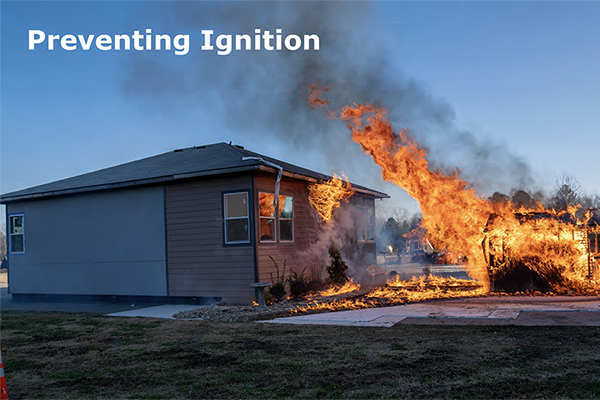
Direct ignition of the structure from flame contact, is caused by embers that accumulate at the base of a wall, and/or indirect ignitions when embers ignite vegetation, vegetative debris or other combustible materials located close to the structure that result in either a radiant heat and/or a direct flame contact exposure to the structure.
Zone Zero is the horizontal area within the first five feet around the structure and any outbuildings and attached decks, and stairs. The zone also includes the area under attached decks and stair landings. To be most effective, the zone should incorporate a 6-inch vertical area between the ground and the start of the building’s exterior siding.
Vegetation within the first five feet of a home—known as Zone Zero—significantly increases heat exposure during a wildfire and can amplify damage, even when plants are well-watered.
While established research defines the importance of the 5-foot noncombustible zone, IBHS conducted a series of tests specifically focused on the impact of vegetation within this area.
Key Takeaways:
- Damage Amplifiers: Vegetation in Zone Zero amplifies the damage to homes, increasing the likelihood of structure ignitions and the severity of damage.
- Moisture: Even well-hydrated plants will ignite and burn in conditions common during a suburban wildfire conflagration. The moisture content of plants increases the time to ignition, which in turn allows the structure to preheat longer, making the structure more susceptible to ignition when the vegetation in Zone 0 ignites.
- Wind & Interventions: Local wind environments influence wind speed and direction. These fluctuations, along with firefighter interventions, help explain some of the contrasting observations regarding consumed and unconsumed vegetation documented in the field during post-event damage investigations after a conflagration.
Zone Zero vegetation—regardless of species or moisture—poses a significant ignition risk to homes during wildfires.
Click on the links below to view these interesting Powerpoint presentations to get a better understanding of the Science Behind Zone Zero.
Yana Valachovic’s presentation: Zone Zero Explained
Steven Hawks’s presentation: Wildfire Science From Lab to Field
Click on links below to view other resources from IBHS:
Images and data courtesy: University of California ANR, IBHS, and United Policyholders
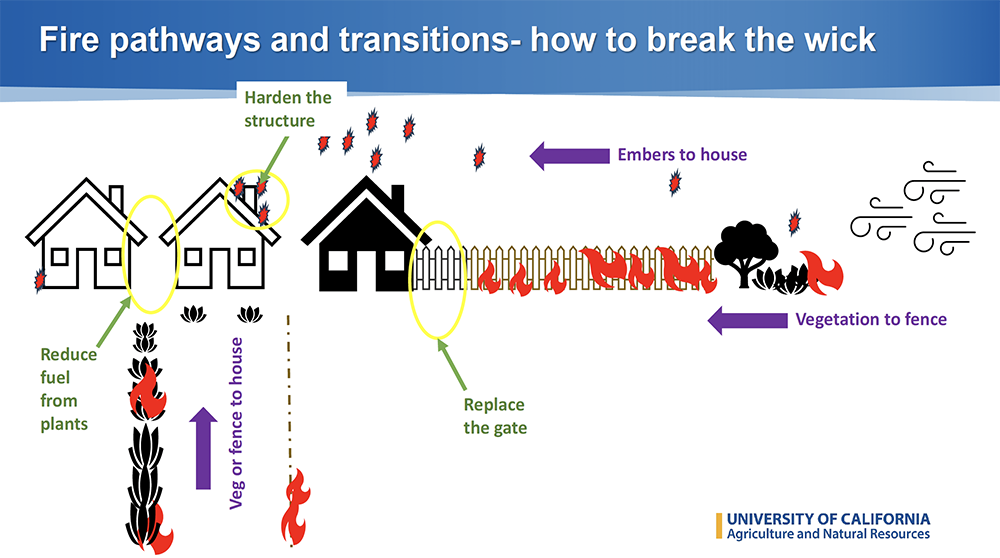
In Yana Valachovic’s presentation, the University of California ANR demonstrates fire pathways and transitions.
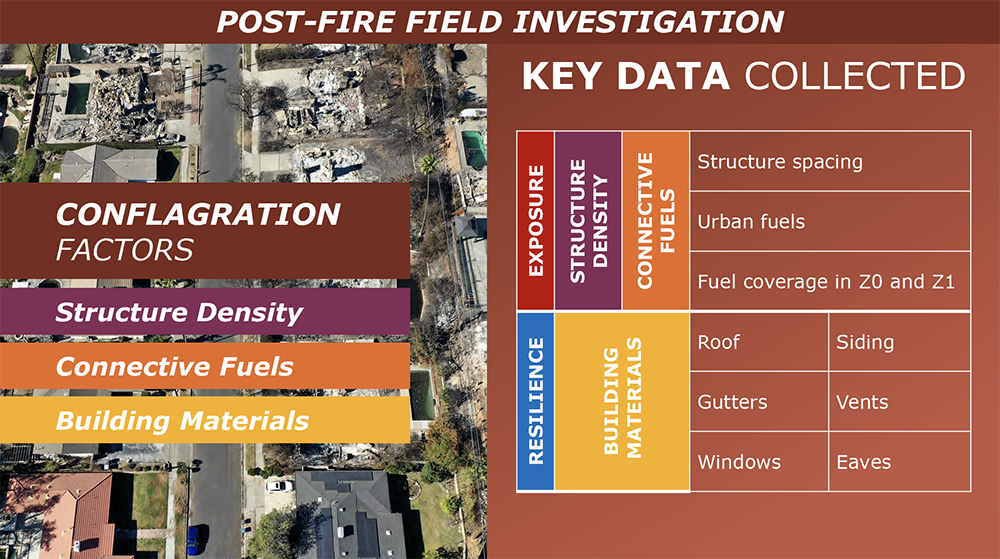
In Steven Hawks’s presentation, the Insurance Institute for Business & Home Safety demonstrates key data collected from post-fire field investigations.